
MCRO Cottonwood County Court Records
Minnesota Court Records Online, usually called MCRO, is the main public portal for Cottonwood County District Court records. It covers Minnesota district trial courts, so it is the correct starting point for local civil lawsuits, criminal cases, traffic citations, family cases, probate matters, and docketed judgments filed in Windom. Cottonwood County does not have a separate county-built district clerk search portal. When a record is not available through MCRO, the fallback is Cottonwood County Court Administration at the courthouse.
MCRO has four practical search paths. Case Search is the broad case lookup tool. Document Search is used when the court file number is known and a public document may be downloadable. Hearing Search is used for calendars and upcoming or recent hearing events. Judgment Search is for docketed monetary judgments. Public documents downloaded through MCRO are free, but certified copies and exemplified copies still come through the court office.
- Open MCRO Case Search and accept the terms if the prompt appears.
- Choose Name, Case Number, Citation Number, or Attorney. Case number is often the best route for pending criminal or traffic matters.
- Use Court Locations, select County, search for Cottonwood, and check the Cottonwood county option to narrow the results.
- Choose the case category, such as Civil, Criminal, Family, Probate or Mental Health, then run the search.
- Open the case detail and read the Register of Actions, hearings, parties, case status, and document links. If a document is missing, call Court Administration.
The MCRO Document Search screen is shown in the manifest source for Cottonwood County court records.
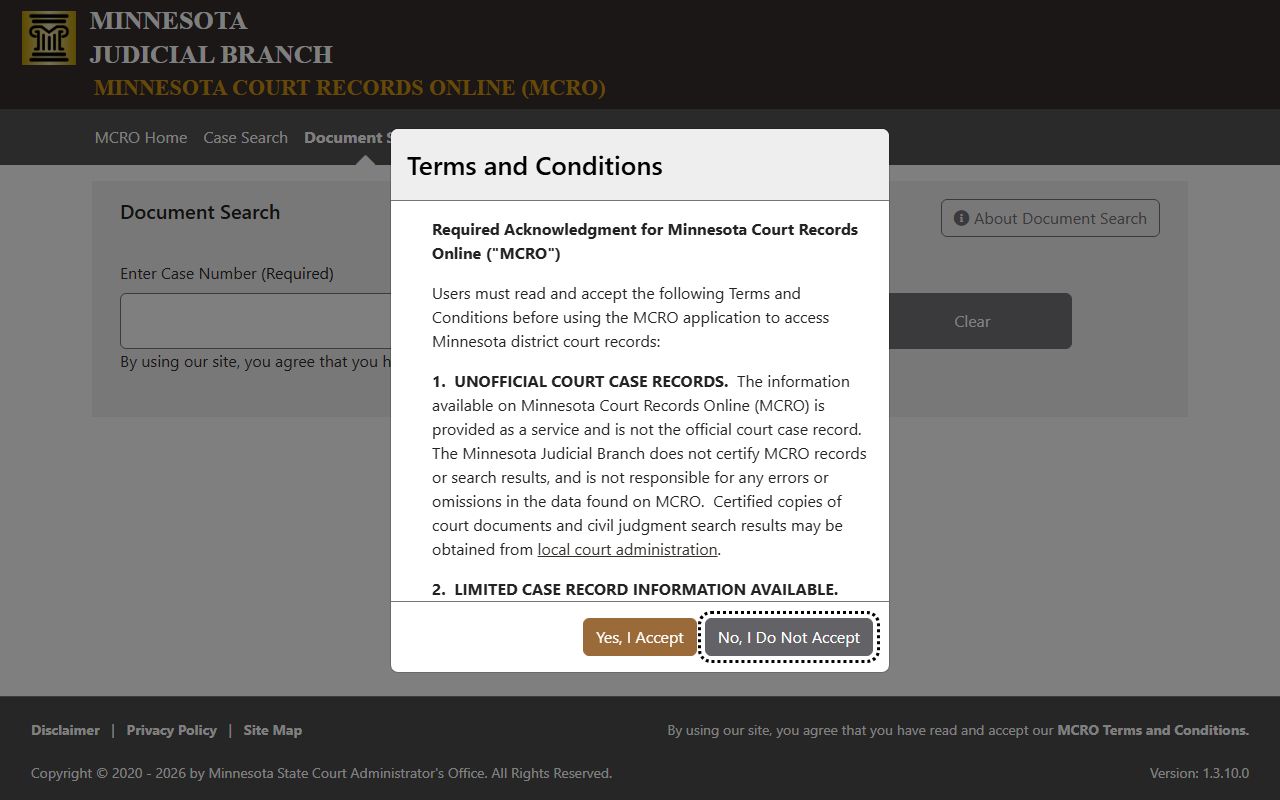
Document Search matters most after a user has already found the court file number in Case Search or received it from Court Administration.
Cottonwood County Court Records Fields
The MCRO Case Search fields make Cottonwood County court records easier to narrow when a name is common or a person has cases in more than one Minnesota county. Name searches require first and last name for a person. Case number searches require the exact court file number. Citation number searches help with traffic and petty misdemeanor cases. Attorney searches can use an attorney name or Minnesota license number.
| Field Label | Type | Required | Notes / Format |
|---|---|---|---|
| Search tab | Tab buttons | Yes | Name, Case Number, Citation Number, or Attorney. |
| First and Last Name | Text | Yes on person name search | Use Sounds Like for fuzzy name matching if exact spelling is uncertain. |
| Date of Birth | Date filter | No | Exact date or date range can reduce false matches. |
| Case Category | Checkbox group | No | Civil, Criminal, Family, Probate or Mental Health. |
| Court Locations | Radio and checkbox | No | Choose County and select Cottonwood for local results. |
| Case Number | Text | Yes on case-number tab | Letters, numbers, and hyphens should be entered as shown. |
| Citation Number | Text | Yes on citation tab | Used for traffic and citation cases. |
The MCRO Hearing Search source shows the separate calendar search path for Cottonwood County court records.
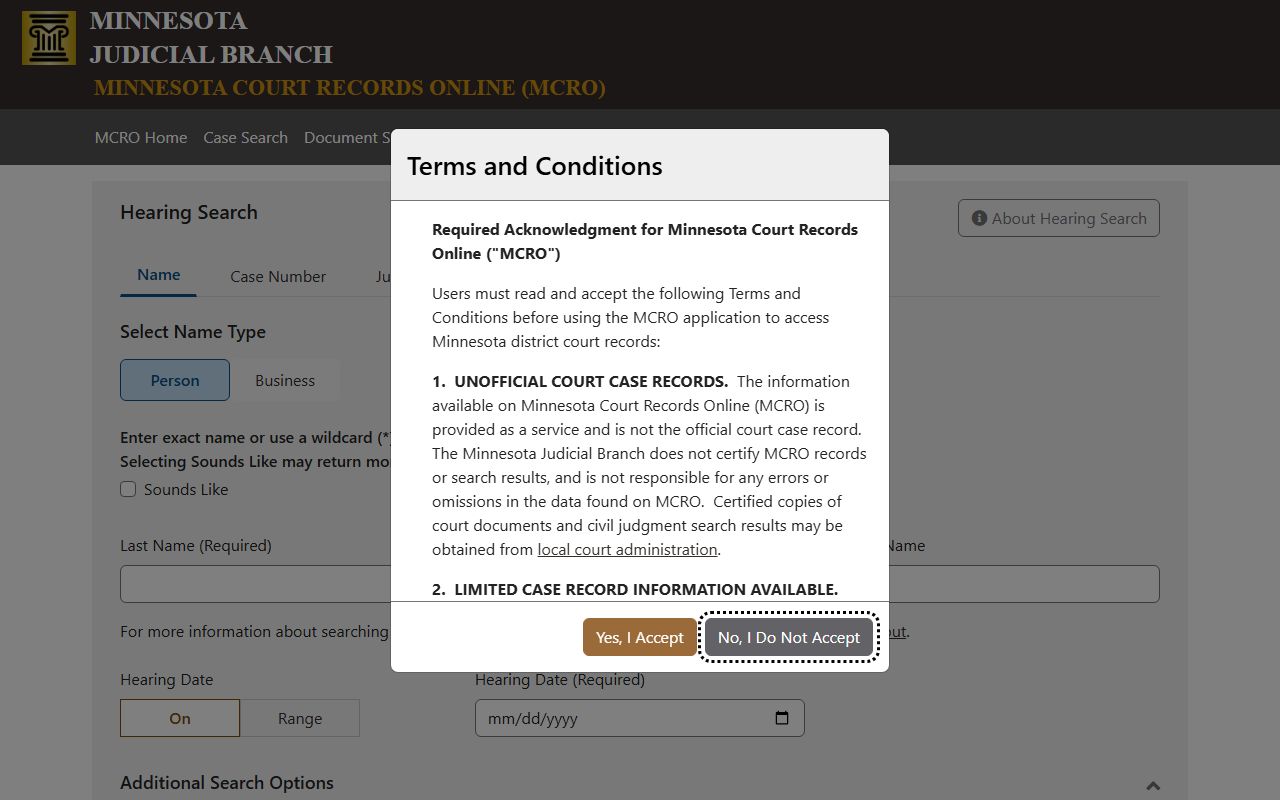
Hearing Search is useful when the goal is a court date, not a copy of a pleading or final order.
Types of Cottonwood County Court Records
Cottonwood County District Court is the trial court for local case filings. The same court handles civil, family, probate, juvenile, criminal, traffic, and judgment matters. Minnesota does not use JP courts or county courts at law, so municipal police departments may issue citations, but the official court record routes to District Court, MCRO, WebPay, and the Minnesota Court Payment Center. The Court Administrator is the local office for case files and certified court copies.
Civil records include complaints, answers, motions, orders, money judgments, garnishments, housing actions, name changes, and tax matters. Conciliation Court is Minnesota's small claims track for claims generally at or below $20,000. Family files include divorce, custody, parenting time, paternity, child support, domestic abuse, and harassment matters. Probate files include estates, trusts, guardianships, and conservatorships. Traffic and petty misdemeanor cases include citations, payment entries, court dates, and possible failure-to-appear events.
- Criminal case files may show complaints, citations, charges, pleas, warrants, bail or bond, hearings, dispositions, and sentencing.
- Judgment records may show debtor and creditor names, docketed date, active or inactive status, satisfaction, and garnishment activity.
- Probate records may show estate filings, wills, letters, inventories, notices, accountings, and orders when public.
- Family documents have stricter online document access, especially for non-court-generated filings.
- Juvenile, adoption, civil commitment, sealed, and expunged matters are restricted or omitted from remote access.
What Cottonwood County Court Records Show
A Cottonwood County court record should be read as a case file, not just a name match. Minnesota case numbers use county and case-type codes. Daily calendar examples include formats such as 17-JV-25-87, where 17 identifies the Cottonwood court location, JV marks a juvenile case category, the next two digits mark the filing year, and the last number is the sequence. Other case codes may appear for criminal, civil, family, probate, and traffic matters.
| Field | What It Shows |
|---|---|
| Case Number | The court file number used for MCRO, Document Search, certified copies, and local court questions. |
| Case Location | The county or court location, which should identify Cottonwood for local district court filings. |
| Case Category | Civil, Criminal, Family, Probate or Mental Health, plus a more specific case type when available. |
| Parties | Names and roles, such as plaintiff, defendant, petitioner, respondent, state, decedent, ward, or judgment debtor. |
| Register of Actions | The docket list of filings, notices, hearings, orders, judgments, warrants, and payment events. |
| Hearings | Date, time, courtroom, judicial officer, hearing type, and connection type when public. |
| Documents | Downloadable public documents when MCRO permits remote access. |
| Disposition | The outcome or current status, such as judgment entered, dismissed, convicted, closed, or pending. |
The MCRO Judgment Search source is one way to locate monetary judgment records tied to Cottonwood County court records.
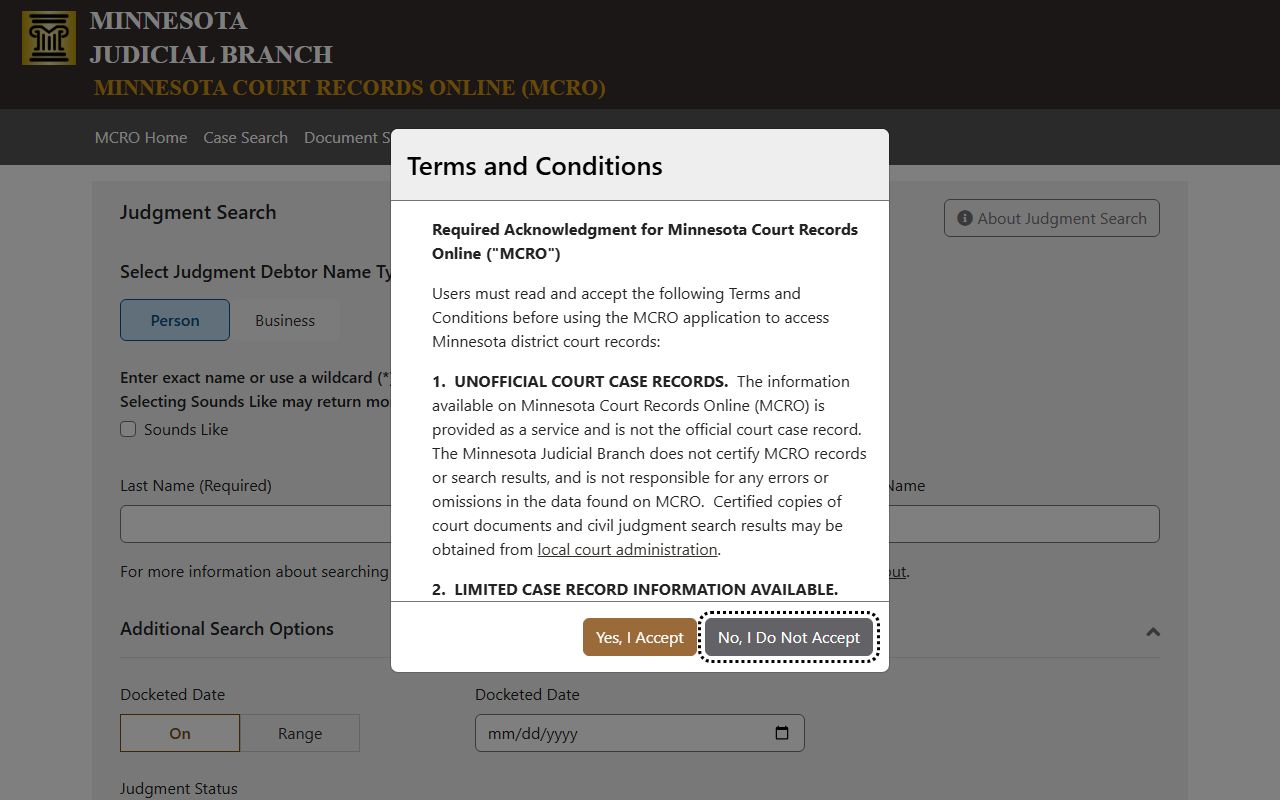
Judgment Search should be separated from ordinary case lookup because it focuses on docketed debts and judgment status.
Cottonwood County Court Records Access
Public access to Cottonwood County court records is controlled mainly by the Minnesota Rules of Public Access to Records of the Judicial Branch. Those rules define what the public can inspect and what can be made available remotely through MCRO. Minnesota's Government Data Practices Act is also important for county government data, but court case records are governed by the judicial-branch access rules.
Online access is not the same as full access. MCRO may show the case detail and public Register of Actions while withholding certain documents. Family case documents are more limited online. Public civil commitment documents are not accessible through MCRO. Pending criminal, traffic, and petty misdemeanor cases with no conviction may not appear in name searches by defendant name, though case-number searches can still work.
Note: If a Cottonwood County court record is missing online, call Court Administration before assuming no case exists.
The manifest source for Minnesota Rules of Public Access supports the access limits used for Cottonwood County court records.
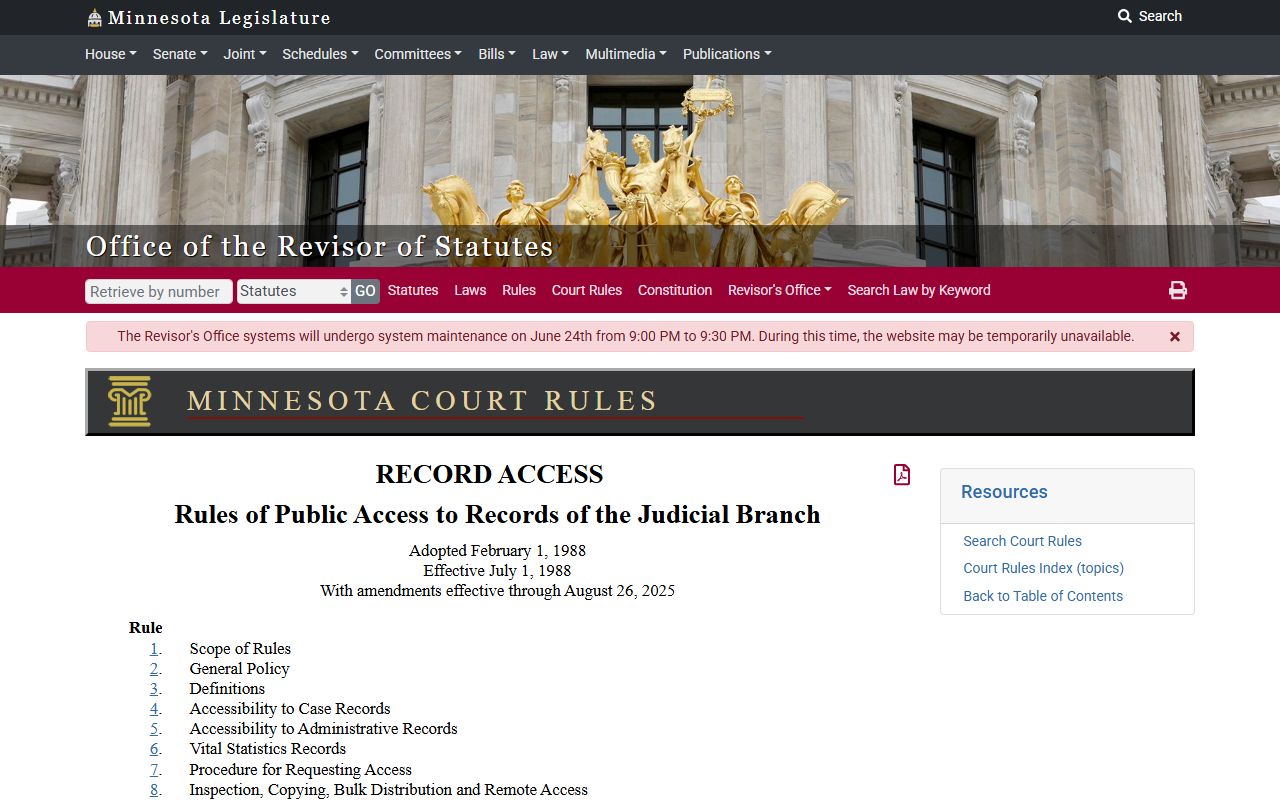
Those rules explain why the same person may have visible docket data, limited document access, or no remote name-search result.
Cottonwood County Court Records Copies
Copies that are available in MCRO can be downloaded at no charge. Certified, exemplified, older, paper, or otherwise unavailable documents should be requested from Cottonwood County Court Administration. Certified copies are often needed when a record must be used for a legal filing, licensing, appeal, or official proof. A plain copy may be enough for personal review, but it does not carry the same court certification.
| Copy or Service | Cottonwood Fee | Use |
|---|---|---|
| Uncertified copy of civil or criminal instrument | $0.00 | Plain copy for review. |
| Certified copy | $14.00 | Official court copy with seal or image of seal. |
| Certified screen print | $14.00 | Certified MNCIS screen print. |
| Exemplified and certified copy | $28.00 | Formal authentication when required. |
| Reports, 1 to 50 pages | $5.00 | Email or paper report from case management system. |
| Judgment search, each certified name | $5.00 | Certified judgment-name search. |
The Cottonwood District Court fee source is the manifest source for local court copy and filing fees.
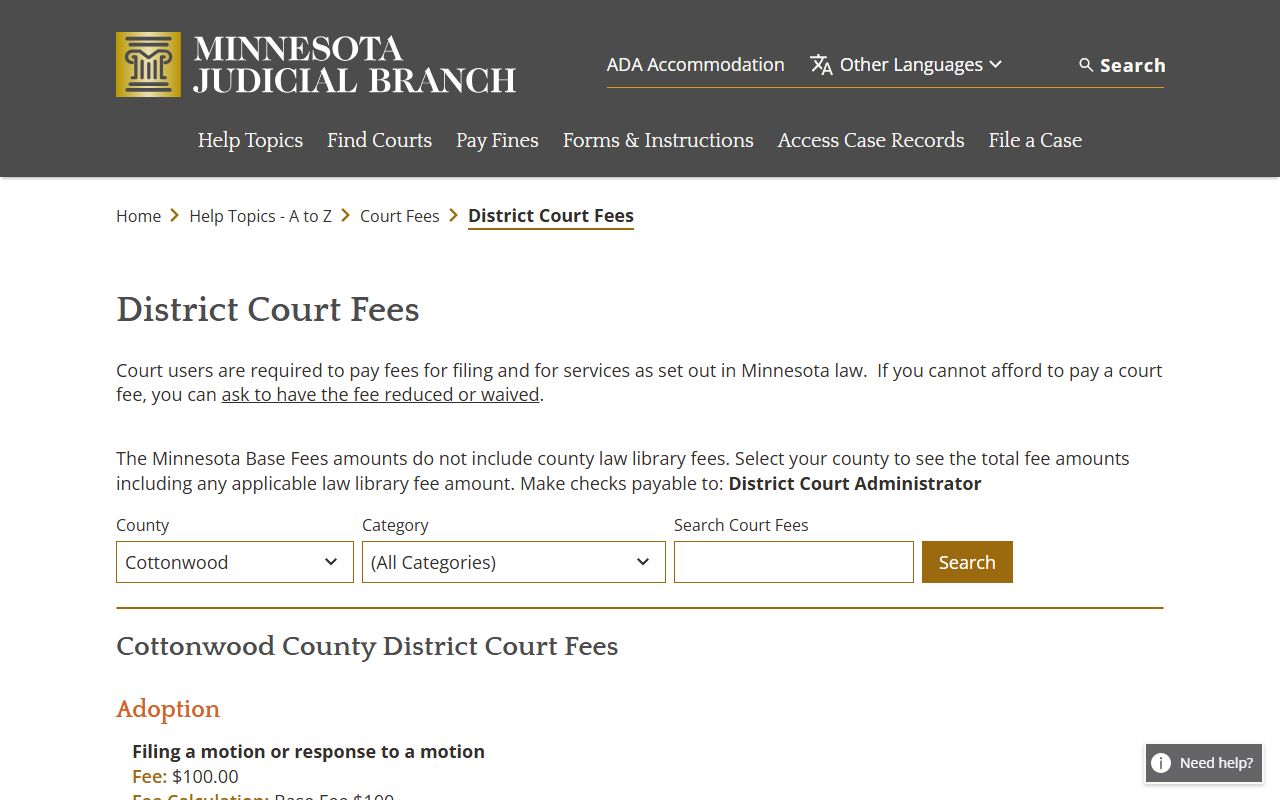
Fee schedules can change, so copy costs should be checked before mailing payment or visiting the counter.
Cottonwood County Court Records Office
Cottonwood County Court Administration is the local record office for District Court case files. It is the place to ask about certified copies, exemplified copies, old paper files, documents not shown in MCRO, sealed or confidential access questions, and hearing check-in. Traffic payments are routed to the Minnesota Court Payment Center, and the local page notes that payments cannot be accepted at the counter after 2:30 p.m. on the last working day of the month.
Mail requests should be confirmed with Court Administration before anything is sent, especially when a certified copy, exemplified copy, or older file is involved. Fine payments by mail use the Minnesota Court Payment Center, P.O. Box 898, Willmar, MN 56201. For court filings or copy requests, use the court office address only after confirming the required case number, copy type, fee, and delivery method.
Cottonwood County Court Administration
900 3rd Avenue, Second Floor
Windom, MN 56101
507-831-7003
Monday-Friday, 8:00 a.m. to 4:30 p.m.
Fax: 507-831-1425
The Cottonwood County Data Practices source is separate from court case access but useful for county department records.
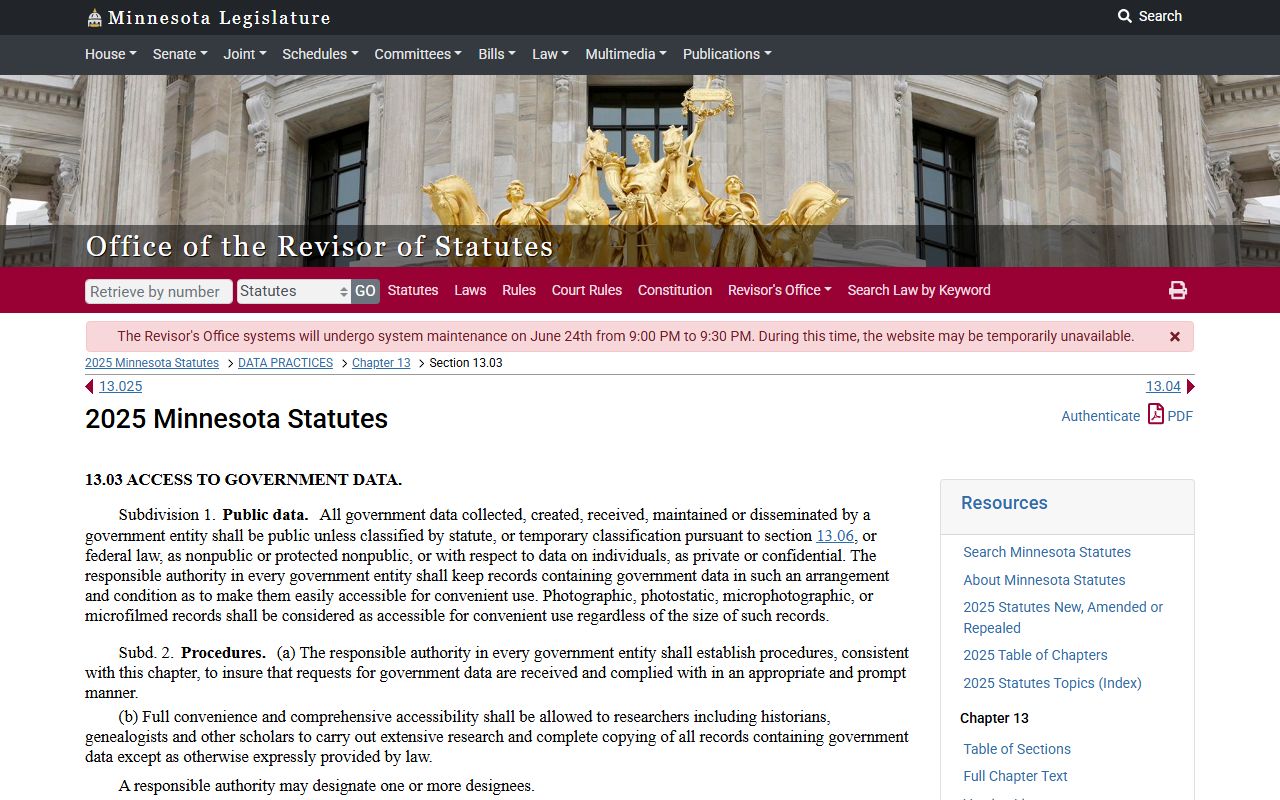
Use Data Practices for county administrative or sheriff records, while court case files remain under judicial-branch access rules.